
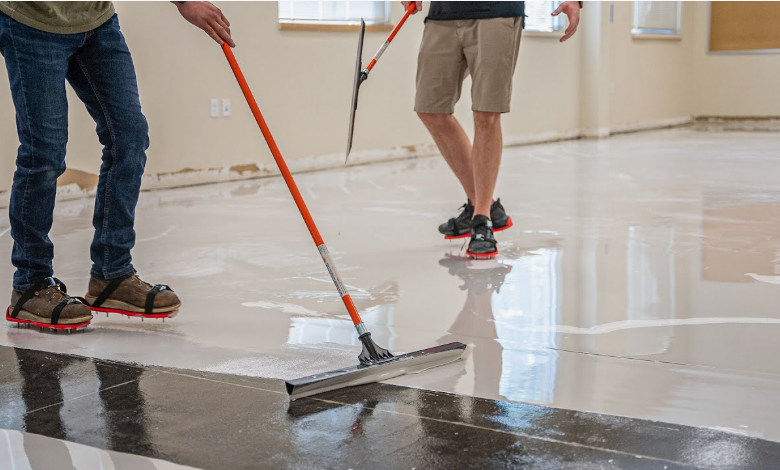
Epoxy works differently from tile because it becomes a bonded resin system rather than a collection of separate pieces laid across the floor. Unlike grout-based surfaces, a properly installed coating forms a continuous layer that can resist chemicals, abrasion, and repeated traffic without relying on joints between individual units. That difference helps explain why epoxy flooring often performs especially well in garages, workshops, commercial spaces, and other areas where the floor takes more abuse than a typical interior room.
Chemical Bonding Creates a Surface That Acts as One Layer
At installation, epoxy resin is mixed with a hardener that starts a chemical reaction known as curing. Once cured, the material changes from a liquid coating into a dense thermoset surface that adheres closely to properly prepared concrete rather than simply resting on top of it.
This bond spreads wear across a continuous layer and reduces the number of weak transitions found in segmented flooring. Because performance depends on the substrate, mechanical preparation and moisture control matter just as much as the resin itself.
Tile Joints Create More Places for Wear to Begin
Tiles can be highly durable, but the system includes grout lines, edges, and separate pieces that respond individually to impact and movement. Grout may stain, crack, or erode over time, especially where wheels, moisture, cleaners, or dropped tools repeatedly cross the same paths.
Seamless epoxy removes most of those exposed joints from the traffic surface. Fewer breaks mean fewer places for dirt, fluids, and mechanical stress to concentrate, which can give an epoxy garage floor an advantage in hard-working spaces.
Impact Loads Travel Differently Through Resin and Tile
Impact from a dropped wrench or metal part can place a large amount of force into a very small area. Rigid tile may chip or crack if that force exceeds what the surface or supporting bed can absorb.
Resinous systems distribute minor impact across a continuous coating and can be built with thicker layers, aggregates, or tougher topcoats for demanding use. Flexible behavior is limited, however, so a coating still depends on sound concrete underneath and cannot make a badly cracked slab structurally healthy.
Chemical Resistance Matters in Garages and Work Areas
Automotive fluids, cleaners, oils, salts, and other chemicals can reach a garage floor during normal use. Properly specified epoxy formulations resist many common contaminants long enough for cleanup, which helps prevent staining and surface damage.
Porous grout and certain tile finishes can absorb or hold residue differently, particularly after sealers wear down. Coated floors are generally easier to wipe clean, although chemical resistance varies by product and should be matched to the substances actually used in the space.
Abrasion Resistance Helps Epoxy Handle Repeated Traffic
Abrasion happens gradually as tires, shoes, carts, grit, and equipment move across the same areas day after day. Repeated friction can dull almost any floor, but high-build systems can provide sacrificial material above the concrete before wear reaches the substrate.
High-build coatings may also use broadcast aggregate or protective topcoats to improve durability in busy zones. Protective layers are one reason epoxy flooring companies often specify different system builds for residential garages, service bays, warehouses, and industrial work areas instead of using one formula everywhere.
Moisture Can Decide Whether Either System Lasts
Moisture beneath a slab can create problems for both tile and coatings, though the failure patterns look different. Tile may loosen, grout may discolor, or efflorescence can appear, while resin systems can blister or delaminate if vapor pressure exceeds what the coating can tolerate.
Professional installers check slab conditions before recommending a garage floor coating because a dry-looking surface can still contain significant moisture. Testing helps determine whether the floor needs additional preparation, a moisture-mitigation primer, or a different system altogether.
Why Surface Preparation Matters More Than Brand Names
Installation quality has a major effect on how long a resin floor survives because epoxy needs a clean, properly profiled surface for strong adhesion. Mechanical grinding or shot blasting removes weak material, old coatings, and contaminants while creating microscopic texture for the new layer to grip.
Experienced crews also repair cracks, treat damaged areas, and remove dust before coating begins. Owners searching for an epoxy floor company near me should ask how the contractor prepares concrete, since premium resin applied over poor preparation can fail long before a simpler system installed correctly.
Seamless Construction Makes Maintenance Less Complicated
Longevity is partly about how easily a floor can be kept clean and protected after installation. Traditional tile can remain attractive for many years, but grout maintenance, cracked pieces, and stained joints may require more localized attention in garages or industrial-style spaces.
For high-use floors, seamless construction makes sweeping, washing, and spill cleanup more straightforward because there are fewer recesses where debris can settle. Pros LLC works across asphalt paving, concrete construction, epoxy flooring, protective coatings, and other heavy-duty surface systems for commercial and industrial properties. By covering both exterior paving and interior flooring needs, the company can support projects that range from driveways and traffic areas to garages, warehouses, and facility floors built to handle abrasion, chemicals, equipment, and daily operational wear.