How Desert-Climate Features Shape Home Buying Decisions in Paradise Valley and Scottsdale, Arizona

Key Takeaways
- Cooling, shade, roofing, windows, drainage, and landscaping can affect comfort, upkeep, and operating costs.
- A beautiful desert property should be evaluated for how it performs during intense sun, dust, wind, and seasonal storms.
- Buyers should consider total ownership costs, including HVAC, pool, irrigation, exterior maintenance, insurance, and repair reserves.
- Qualified inspections and careful review of disclosures remain essential, especially for older or extensively renovated homes.
Buying a home in Paradise Valley or Scottsdale means looking beyond finishes, views, and square footage. Desert conditions place steady demands on a property’s systems and exterior, so a home that appears move-in ready may still need thoughtful evaluation. For buyers comparing estates, condos, and custom homes across the Valley, Paradise Valley AZ real estate agent Mary Chen provides My Phoenix Home Guide, a local real estate website with property searches, neighborhood guides, buyer and seller resources, and market-focused support for Paradise Valley, Scottsdale, North Scottsdale, Arcadia, Phoenix, and nearby communities.
The best purchase decision accounts for everyday livability as well as future maintenance. A well-oriented house with effective cooling, usable shade, sound drainage, and manageable landscaping can feel more comfortable and may be easier to maintain over time.
Why Desert Design Matters When Buying a Home
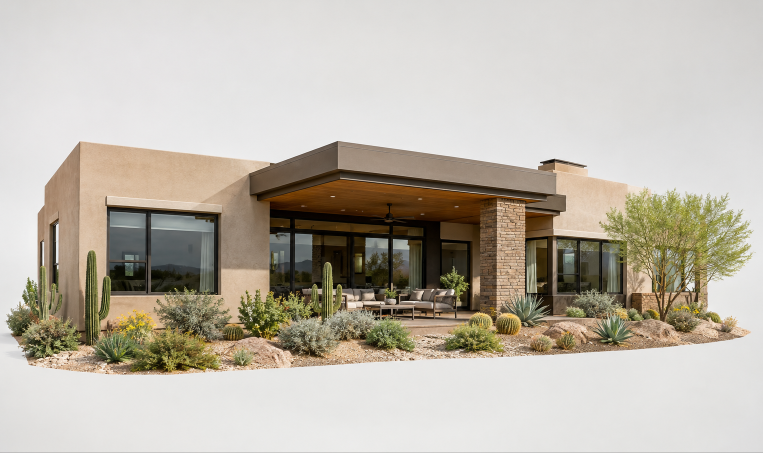
In the Sonoran Desert, direct sun, high temperatures, dry air, blowing dust, and monsoon-season rain can reveal a home’s strengths and weaknesses. A large wall of glass, a dramatic flat roofline, or an expansive patio may be appealing, but performance depends on materials, installation, shade, and upkeep. Buyers should judge the property as a complete system rather than focusing only on cosmetic updates.
Cooling Systems and Indoor Comfort
Air conditioning is a major practical consideration in Paradise Valley and Scottsdale. Ask about the age, service history, warranty status, and capacity of every HVAC unit. A home with multiple systems may allow separate temperature zones, but it also has more equipment to maintain and eventually replace.
Questions to ask during a showing
- Are bedrooms, living areas, and upper floors cooling evenly?
- Does the home have zoned controls, a heat pump, ductless units, or a conventional central system?
- Are ducts located in an attic or another unconditioned space?
- Can the seller provide recent maintenance records and utility bills?
When possible, visit at different times of day. Afternoon conditions can make it easier to notice warm rooms, sun-heavy glass walls, or limited shade that may not be obvious during a brief morning tour.
Shade, Windows, and Home Orientation
Orientation influences how a home feels throughout the day. West-facing windows and patios can receive strong late-day sun, while overhangs, covered patios, exterior screens, trees, and high-performance glazing can help moderate heat gain. Large windows should operate smoothly, seal properly, and show no obvious signs of failed panes, damaged frames, or deteriorated caulking.
Shade also affects outdoor use. Scottsdale recognizes shade as an important part of a heat-resilient built environment in its guidance for trees and shade structures, a useful perspective when comparing courtyards, patios, pool decks, and exposed driveways.
Roofing, Exterior Materials, and Sun Exposure
Roofing and exterior finishes are constantly exposed in a desert climate. Request records for roof work, coatings, repairs, and replacements. During inspections, pay attention to roof tiles, flashing, skylights, drainage paths, exterior sealants, stucco cracks, paint wear, and stains near ceilings or walls. These conditions do not automatically signal a major problem, but they deserve a professional assessment.
Custom homes may combine materials such as stucco, stone, wood, steel, and expansive glazing. Each can be attractive, but each has its own maintenance needs. Buyers should understand which exterior surfaces require periodic sealing, painting, cleaning, or repair.
Landscaping, Water Use, and Drainage
Landscaping is not merely decorative. Mature trees can provide welcome shade, while lawns, pools, irrigation zones, water features, and extensive hardscape can add recurring maintenance responsibilities. Check for erosion controllers, visible drip lines, valves, drainage swales, retaining walls, and areas where water might collect.
Desert-adapted plantings can be a practical fit for local conditions, although every landscape still needs appropriate care. Scottsdale offers homeowner guidance on water conservation, irrigation efficiency, and outdoor water use through its water conservation resources for homeowners. Buyers should also ask whether a homeowners association has landscaping rules that affect plant choices, grass areas, or irrigation responsibilities.
Outdoor Living Areas in a Hot Climate
Pools, outdoor kitchens, fire features, ramadas, and covered terraces can add meaningful lifestyle value. Evaluate them based on actual use, not photographs alone. Consider afternoon exposure, privacy, fan placement, shade coverage, equipment noise, pool safety features, and the condition of built-in appliances.
A modest patio with reliable shade may be more useful than a much larger entertaining area exposed to direct afternoon sun. For pools, request service records and ask about the age and condition of pumps, filters, heaters, automation equipment, and interior finishes.
What to Check During a Home Inspection
A general inspection is an important starting point, but complex properties often benefit from specialists. Depending on the home, buyers may need separate evaluations for the roof, HVAC, pool, sewer line, drainage, structure, or solar equipment.
- Test cooling equipment and review maintenance documentation.
- Inspect the roof, attic insulation, ventilation, and visible flashing.
- Check doors, windows, weather seals, and exterior caulking.
- Review plumbing fixtures, water pressure, water heaters, and visible leaks.
- Inspect irrigation, pool equipment, drainage, hardscape, and retaining walls.
- Confirm permits for additions, pools, shade structures, and major renovations.
Estimating Long-Term Ownership Costs
Before making an offer, estimate more than the mortgage payment. Include electricity, water, property taxes, insurance, HOA dues when applicable, landscaping, pool service, routine HVAC care, and a reserve for future repairs. Compare two similarly priced homes by their systems and maintenance needs, not just their list prices. A home with newer equipment and simpler landscaping may be the more predictable choice over several years.
Local Planning and Property Search
Local design expectations can also shape what buyers see. Newer homes, older estates, and remodeled properties may approach shade, landscaping, drainage, and materials very differently. Review the individual lot, the home’s orientation, improvement history, HOA documents, and disclosures instead of assuming that age, price, or architectural style tells the full story.
Independent due diligence is essential. Work with qualified inspectors, obtain specialist opinions when appropriate, and give equal weight to a home’s climate performance, maintenance demands, location, and long-term fit.